

“Learn to listen – not only to what you are looking for but to what others have to say. So much more information is out there if you keep your mind open to it.” –Steve Levine
Steve Levine earned both his BS and PhD degrees in ceramics and materials science. He boasts more than 30 years of experience as a business development professional who has focused on Software as a Service (SaaS), research and development, life sciences, engineering, strategy, marketing, and sales. He joined Dassault Systèmes in 2006 as chief strategy officer after serving as a senior director of business development at Accelrys and as a senior scientist at Biosym Technologies and Engelhard. Today, he is the senior director of virtual human modeling and founder of the Living Heart Project at Dassault Systèmes. By developing an accurate, virtual 3D model of the human heart, the Living Heart Project is revolutionizing the treatment of the world’s leading cause of death – heart disease. Levine, a fellow of the American Institute of Medical and Biological Engineering Society, was named one of “10 Engineers Who Mattered in 2020” by Engineering.com.
Why Rutgers engineering?
Rutgers had a great reputation. I knew I was interested in engineering, but I wasn’t sure what I wanted to focus on. I liked the blend of science, technology, and engineering that a major in ceramics and materials science offered.
What do you value most about your Rutgers education?
It provided key foundations in cutting edge areas of science and engineering that I could build on. Looking back, one of the places I liked to go to study on Busch campus was the Library of Science and Medicine. What have I done in my career? I’ve worked to combine engineering, science, and medicine.
What sparked your epiphany that led to found the Living Heart Project?
My daughter Jesse was born with a rare congenital heart condition in which her left and right ventricles were reversed and for which there was very little reliable medical data and that was nearly certain to shorten her life.
I wanted to find a way to help save her life.
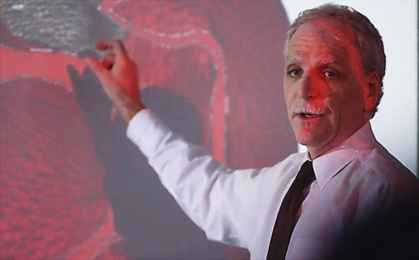
At Dassault Systémes, I was working on helping companies that build planes and cars make sure they are safe before they are built by using 3D computational crash test models. I wondered why we couldn’t do that for the medical field by building a realistic virtual
human heart. I believe that in medicine – as in so many other areas – a picture is indeed worth a thousand words.
Was Jesse involved in the project in any other ways?
The first year, I didn’t let anyone at work know about Jesse. I hadn’t brought her into the story because I didn’t feel comfortable about bringing her into my professional life.
But at one point, she asked me why not? She said that if it would help one more kid to share our experience, it would be worth it. She is truly a testament to what can happen when you are forced to face tough situations. Jesse chose to shape it in a constructive way and not feel like a victim. As Jesse has said, “The best thing you can do is take what you’ve been given and be inspired by it.”
How is Jesse today?
She received her MD and PhD in neuroscience from New York University and is currently a first-year pediatric neurology resident in Houston.
What did it take to build a living heart model?
It took a lot of collaboration among cardiologists, engineers, and scientists. Hundreds of people who only had one piece of the puzzle shared their best knowledge so that we could develop the first simulation of the entire human heart.
Was the FDA on board with the project from the start?
It took a while, but the FDA stepped up when they realized the Living Heart Project can save lives – and costs – when you get it right the first time. You can do 90% of a clinical trial virtually and then validate it, which saves massive amounts of time and money. The FDA knew it was a journey worth going on when they agreed to come on board.
What kind of an impact has it had?
I firmly believe that the best way to improve our healthcare system is to give people the tools to help them manage their health better.
Today, for example, doctors at Boston Children’s Hospital can practice before performing cardiac surgery, which can prevent them from making mistakes and save lives. We’ve set up virtual tablets for patients to interact with so they can see and really understand what is happening.
Has the coronavirus pandemic affected your work?
The story really hasn’t been told yet. The science world is changing as a result of the pandemic. The WHO open agreement for researchers to share their data on COVID-19 has changed everything. The FDA can approve things in a couple of weeks because people are sharing information.
It’s a wake-up call that we have to be more open about things. My paradigm has been that we need to compete based on how well we use information, not just how well we protect it.
Are researchers studying the long-term effects of COVID-19 using the Living Heart Project?
Yes. A couple of groups, including one at McGill University in Montreal, have been modeling COVID-19 patients in order to see the effects of the virus on long-haulers.
Some of our collaborators are studying COVID-19 patients and we’re already working on helping to establish a national center for studying the long-haulers, where we’ll build virtual hearts, brains, and lungs and see what is happening inside.
What does your recognition as an Engineer Who Mattered in 2020 mean to you?
The recognition is meaningful as it isn’t typical for the engineering world to acknowledge publicly that your work really does matter. One reason I think I was recognized was because COVID-19 shone a big light on the limitations of our medical system. People looked around to see how could we do things better.
How do you share your story?
I’ve become conscious of how much more we can achieve if we allow people to really understand what they’re dealing with. It’s deep in my soul to help build systems to educate parents and patients because I felt helpless as a parent for so many years.
I can talk to the world’s most sophisticated cardiologist and to a teenager, and they both get value out of the same information.
I recently gave a webinar, for instance, to students at the New Jersey STEM Academy in Brick Township. They observed a heart transplant in the morning, and spent time in the afternoon with a living heart project heart.
What advice do you have for today’s engineering students?
Learn to listen – not only to what you are looking for but to what others have to say. So much more information is out there if you keep your mind open to it.


