Four Questions for MAE's Qichen Song
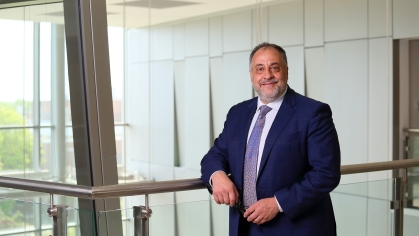
Having earned her undergraduate degree in applied sciences in engineering at Rutgers School of Engineering, Patricia Santos. Today marks a new chapter at Rutgers University - I am thrilled to share that I have been promoted to Associate Professor of Professional Practice.
My deep love of teaching continues to drive my work every day. In this new role, I am excited to actively grow the program and create even more impactful opportunities for our students.
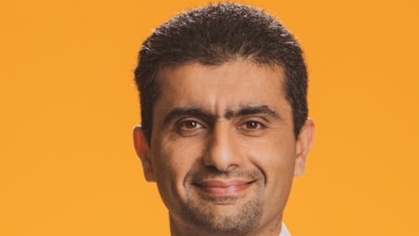
Four Questions for Assistant Professor Qichen Song
What fuels your passion for mechanical and aerospace engineering?
It started with curiosity. My father used to own a small metal casting and machining shop, and as a middle school student I hung around the workshop a lot. One day a customer needed to know the volume of a part my father was making, and I was able to calculate it using the math I had just learned at school. It showed me that math could solve real-life mechanical engineering problems.
As an undergraduate, I got into research and learned to write Fortran code to simulate how heat is conducted by atomic vibrations, using only the most basic laws of physics. That experience taught me that understanding a problem at its most fundamental level is a powerful way to solve engineering problems. Over time, that curiosity has grown into a drive to find good problems, solve them from the most fundamental level, and eventually make a real impact.
What is your current research focus and who is most likely to benefit from its results?
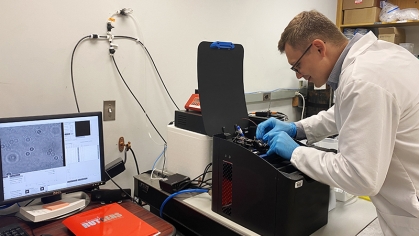
AI holds exceptional promise to make society more energy efficient, but currently building more powerful AI requires enormous and fast-growing amounts of energy. My research focuses on this energy-AI paradox. At the heart of the paradox is heat. Virtually all of the electricity used by computer chips is converted directly into heat, and removing that heat through refrigeration requires even more electricity.
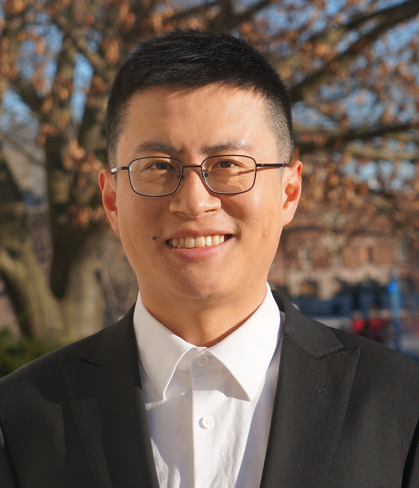
I tackle this challenge in two ways. First, I want to know exactly where heat builds up inside computer chips. This is essential to designing chips that generate less heat. Second, I look for better ways of cooling. Today's data centers use cooling systems that can leak harmful gases into the environment. By studying new solid-state refrigerants that emit no harmful gases, I hope to find cooling solutions that are more sustainable.
I believe this work will help both the companies that build AI hardware and data centers, which want more efficient computing, and the heating and cooling industry, which is looking for cleaner cooling technologies.
What are you looking forward to as a new faculty member?
I look forward to learning from each of them, and I hope to grow into a good researcher and teacher whose work brings recognition to this community.
What do you like to do when you're not being an engineer?
To me, there is no better way to get to know a city than on my own two feet (plus a nice post-run meal).