Four Questions for ISE's Feng Liu
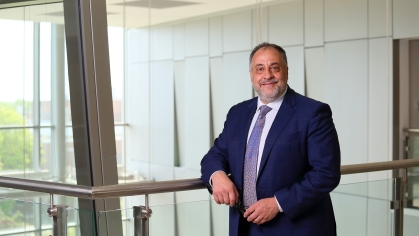
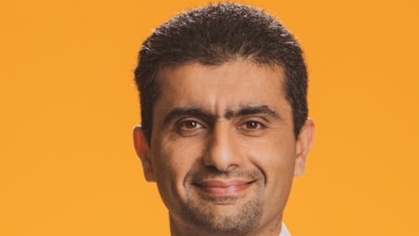
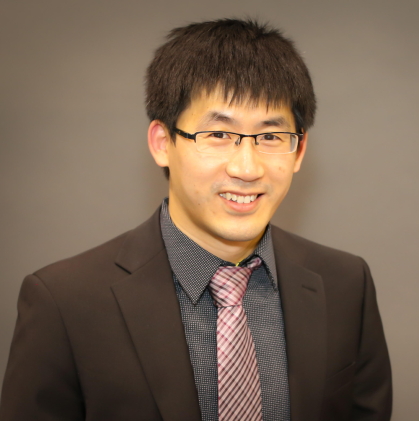
From Harvard crimson to Stevens red to Rutgers scarlet, Feng Liu is bringing his research in AI for neuroscience to the Department of Industrial and Systems Engineering. Working closely with colleagues within the school and beyond, Professor Liu's lab will advance AI methods to decode brain dynamics and uncover how brain networks change in health and disease.
Four Questions for Assistant Professor Feng Liu
What fuels your passion for industrial and systems engineering?
Industrial and systems engineering is the science of making complex systems work better for people. It provides rigorous tools for modeling dynamic systems, optimizing decisions under uncertainty, and solving problems that cross disciplinary boundaries. My group develop and applies those tools to one of the most intricate dynamic systems of all: the human brain. I find it deeply rewarding to uncover meaningful patterns in noisy brain imaging data, especially when those patterns help us better understand a brain disorder or point toward a more personalized intervention. Connecting fundamental engineering ideas to questions that matter to patients and clinicians is what sustains my passion.
What is your current research focus and who is most likely to benefit from its results?
My lab brings together artificial intelligence, brain imaging, and noninvasive brain stimulation to better understand brain function and develop more personalized approaches to health care.
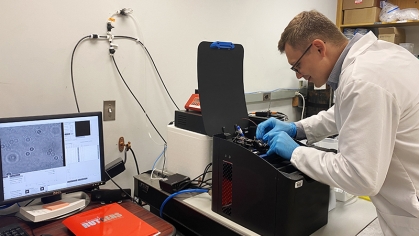
A central focus is EEG source imaging, which uses electrical signals recorded at the scalp to estimate where activity originates within the brain. We develop optimization and machine learning methods to make these estimates more reliable and study brain networks associated with neurological and mental health conditions. We also investigate brain stimulation that adapts to a person's ongoing brain activity. Treating the brain as a dynamic system, we use its signals in a closed loop to optimize when and how stimulation is delivered. For example, we are exploring how precisely timed stimulation could support the rhythms involved in deep, restorative sleep. Alongside this work, we develop AI tools that draw on medical records to support clinical decisions and provide clearer, more personalized health guidance.
The potential beneficiaries include patients living with neurological and chronic conditions, older adults experiencing cognitive decline, and the clinicians and neurosurgeons for better decision making. Our goal is to translate complex data into insights that help inform personalized healthcare.
What are you looking forward to as a new faculty member?
I look forward to building interdisciplinary collaborations across Rutgers, especially among engineering, neuroscience, and medicine. The scientific and clinical questions that drive my research require diverse expertise, and I am eager to work with colleagues and clinical partners on projects grounded in real health needs.
I am equally excited about teaching core technical skills and mentoring the next generation of researchers in the exciting field of AI for neuroscience. In the classroom, I ant students to see how abstract ideas become practical tools for solving meaningful problems. In my lab, I hope to create an environment where students feel comfortable asking questions, exploring unfamiliar ideas, and learning across disciplines. Helping students grown in confidence and develop their own research directions is one of the most rewarding parts of being a faculty member.
What do you like to do when you're not being an engineer?
Outside of work, I enjoy playing table tennis and spending time with my family. Table tennis keeps me active and helps me clear my mind. I also enjoy listening to neuroscience podcasts during my commute, which gives me to to explore new ideas and follow my curiosity about the brain. I also love exploring nature, and have traveled to 39 U.S. states.