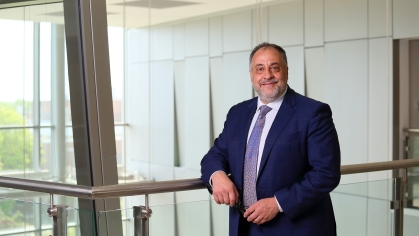
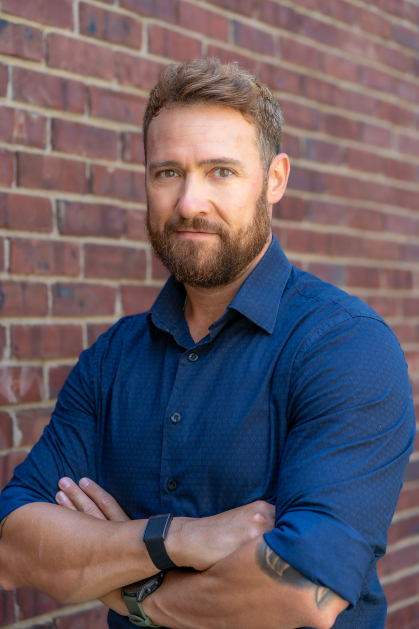
Four Questions for Instructor of Professional Practice Joseph Konczynski
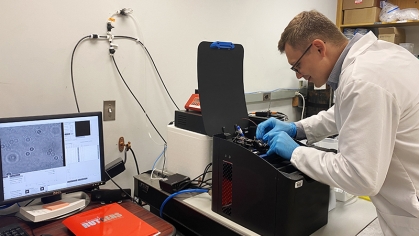
Having begun his doctoral studies at Rutgers in biomedical engineering in September 2024, Joseph Konczynski, P.E. was familiar with both the School of Engineering and the BME department before joining SoE's undergraduate education department as an ID3EA program instructor of professional practice in September 2025. While he is putting his PhD on hold as he transitions into his full-time faculty position, Joseph ultimately plans to continue with his degree. As a licensed professional engineer and systems expert, he has specialized in mission-critical infrastructure and technical education. He is also the co-founder of a biotech research and investment venture, COSM Research.
What drew you to biomedical engineering?
I was attracted to BME because it allowed me to extend my electrical and systems engineering into a new domain. My work in mission-critical power systems trained me to think in terms of reliability, structure, and controlled execution, and that mindset carries directly into any complex system I study or teach.
As an instructor of professional practice, how are you bringing the engineering industry into the classroom and engaging your students?
I ensure that every topic and lesson I teach includes at least one real-world example or practical connection, drawn from my experience in the mission-critical power industry and expertise gained as a subject matter expert and engineering systems specialist.
I engage my students by consistently connecting course topics to industry, showing where and ho
w each concept is used by practicing engineers and why it matters in professional settings. I emphasize communication, professionalism, and clear technical reasoning — and I expect students to engage with engineering problems methodically, clearly, and with purpose, the same way professionals do. I reference industry often, so they understand how these expectations translate to real engineering environments.
How are you preparing students for careers in industry?
Through Rutgers Engineering's unique ID3EA program, which emphasizes collaborative design projects that mirror professional engineering workflows. My industry background helps bridge classroom learning with real-world applications, giving students context for technical and communication skills.
What do you most enjoy and what excites you the most as a new faculty member?
I most enjoy working with my students, seeing their progress, curiosity, and problem-solving skills develop through their projects. I also enjoy working alongside my colleagues to develop hands-on interdisciplinary projects.
I'm most excited to contribute to the collaborative teaching model by connecting academic concepts to applied engineering practice and professional development.