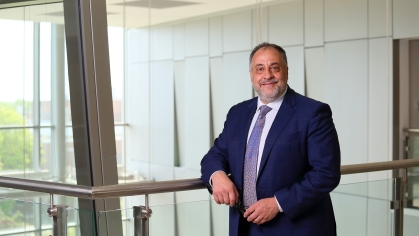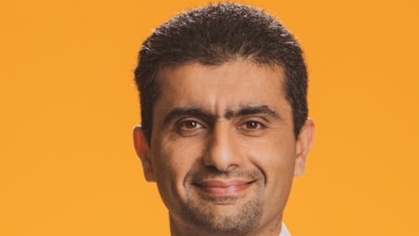
Four Questions for ECE's Jianlin Zhou
What fuels your passion for electrical and computer engineering?
What I enjoy most about electrical and computer engineering is the opportunity to turn scientific ideas into technologies that can solve real-world problems and improve people's lives. I've always been interested in how electromagnetic fields and waves interact with complex environments, especially biological tissues, and how we can use that understanding to develop new electronic devices and sensing methods. It's exciting to see how these technologies can give us access to physiological information that was previously difficult to measure, sometimes revealing things we didn't fully understand before. What I find most rewarding is taking an idea from a fundamental engineering question to a working device and ultimately seeing its potential to make a difference in healthcare.
What is your current research focus and who is most likely to benefit from its results?
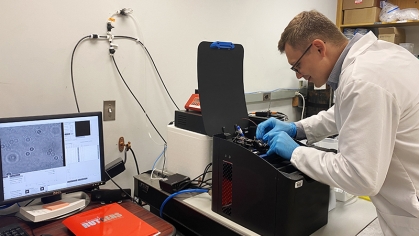
My research focuses on developing new sensing technologies and wireless bioelectronic devices for healthcare. A major part of my work involves studying how electromagnetic fields interact with biological tissues and using that knowledge to develop new ways of monitoring physiological functions, particularly cardiac and respiratory activity. I also work on flexible and wireless electronics, including wearable sensors, minimally invasive medical devices, and wirelessly powered implants.
I am especially interested in applying these technologies to cardiovascular and respiratory health, women's and maternal health, and fetal and neonatal care. Many of these areas still face challenges in obtaining reliable physiological information, particularly when continuous monitoring is needed or conventional devices are too invasive. My goal is to develop technologies that address these limitations and give clinicians better tools to understand what is happening inside the body and make more informed decisions.

Ultimately, I hope this work will benefit patients who need closer monitoring or less invasive treatment, including pregnant women, newborns, and people with heart or respiratory conditions.
What are you looking forward to as a new faculty member?
I am really looking forward to building my research group at Rutgers and working with students to explore new ideas and tackle interesting engineering challenges. I am also excited about the opportunities to collaborate with colleagues across the School of Engineering and the broader Rutgers community, including researchers in other disciplines, the sciences, medicine, and veterinary medicine. I have always enjoyed working with people from different backgrounds, and I hope to build collaborations that bring new perspectives to our research and help address real-world problems.
Teaching and mentoring are another part of being a faculty member that I look forward to. I enjoy sharing what I have learned with students and helping them develop their own intersts and ideas. I would also love to see more undergraduate students get involved in research early in their studies. I think working on real research projects is a great way for students to connect what they learn in the classroom with practical engineering challenges and perhaps discover a passion for research along the way.
What do you like to do when you're not being an engineer?
I'm a big sports fan and enjoy following soccer, basketball, football, and baseball. Outside of work, I love spending time with my family, especially getting outdoors and trying different activities with my children.