Four Questions for Assistant Professor Rachel Yang
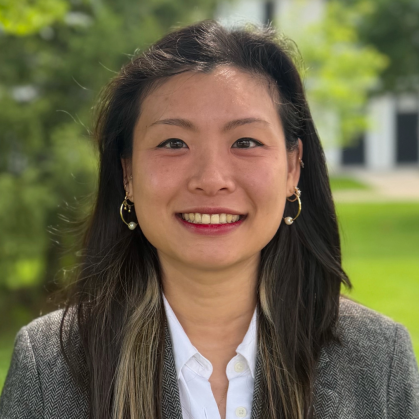
A New Jersey native, Rachel Yang earned her undergraduate degree in chemical engineering from Rutgers in 2018. An experimentalist in the Celik Catalysis Group, she studied supported metal nanoparticle catalysts for energy and chemical production applications. Yang returns to her alma mater and department as an assistant professor to share her passion for helping students grow as researchers and discovering new scientific directions together.
What fuels your passion for chemical engineering?
I am fascinated by studying materials, solid porous catalysts in my case, at the molecular level to first develop fundamental insights into how promising materials work (or don't work) and then translating those findings into (1) rational design priniciples for future materials and (2) larger scale applications that can benefit society. Chemical engineering has given me the fundamental toolbox in chemistry, physics, and mathematics to be able to pursue these research interests and I am excited to contribute to educating and mentoring the next generation of engineers.
What is your current research focus and who is most likely to benefit from its results?
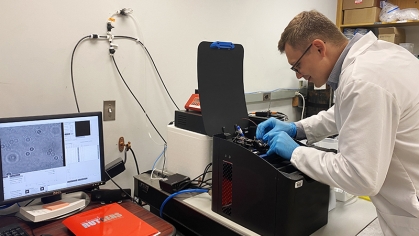
My current research focus is broadly on heterogeneous catalytic systems for sustainable chemical conversion processes. My group specifically investigates porous solids (like metal-organic frameworks and metal oxides) as catalysts to transform abundant or renewable feedstocks into valuable chemicals, pharmaceuticals, or fuels. Ultimately, we aim to develop fundamental insights and unifying concepts that guide the design of more sustainable and efficient processes for producing the materials and products society relies on. Our work has the potential to benefit industries involved in chemical manufacturing, energy, and pharmaceutical production, as well as society more broadly through more sustainable resource use.
What are you looking forward to as a new faculty member?
I am looking forward to teaching, mentoring students at all stages of their academic journeys, and building a research group that makes meaningful contributions to science and society. I am especially excited about helping students grow as researchers and discovering new scientific directions together.
What do you like to do when you're not being an engineer?
When I am not being an engineer, I am an avid crafter (knitting, crocheting) and enjoy both board and video games.