BME Professor Member of ARPA-H Funded Multidisciplinary Consortium Transforming Critical Care
Each year, up to 30% of America's 4.6 million critical care patients die in the hospital due to imprecise tracking of immune system responses. Through its Critical Illness Immunological Reprogramming and Control Point Learning Enginer (CIRCLE) program, the U.S. Department Advanced Research Projects Agency for Health (ARPA-H) intends to transform ICU care by funding teams tasked with developing innovative lifesaving tools.
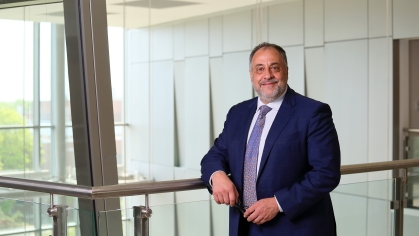
Ioannis Androulakis, a professor in the Departments of Biomedical Engineering and Chemical and Biochemical Engineering, is heading a Rutgers team led by Novelna, Inc., that has received an ARPA-H award of up to $25 million through its CIRCLE program.

Novelna's founder and CEO is the team's PI, with the University of Washington, Indiana University, the University of Texas at Austin, MIT, Yale University, the University of Tennessee Health Science Center, the University of Virginia, and the University of Connecticut joining Rutgers as well as industry partners imec, Siomys, and BioAegis Therapeutics.
The Rutgers team is part of INFLECT (Integrated Feedback Look for Early Control-point Therapeutics), a multidisciplinary consortium uniting immune sensing, computational biology digital twins, clinical medicine, and therapeutic development experts led by Novelna, a company committed to improving health outcomes with early disease diagnostics. Androulakis' group is expected to receive up to $1 million for its contributions to mechanistic modeling and digital twin development—with the goal of identifying and ranking critical control points to evaluate and optimize both FDA-approved and novel therapeutic interventions.
Revolutionizing Critical Patient Care
"Our five-year project aims to fundamentally change how we monitor and manage critically ill patients by integrating advanced immune sensing, mechanistic computational modeling, and patient-specific digital twins," Androulakis says. "I'm excited by the opportunity to take digital twins beyond describing and predicting disease and move them toward identifying lifesaving therapeutic interventions.
"Rather than simply detecting when a patient's condition deteriorates, we want to anticipate potentially dangerous changes and identify opportunities for early therapeutic interventions. And transform critical care from a largely reactive process to one that is more predictive, proactive, and personalized."
A More Complete Understanding of a Patient's Condition
According to Androulakis, by monitoring patients throughout critical illness, especially at points where immune and inflammatory responses can change quickly, the proposed technology aims to deliver frequent measurements of immune activity in order to track real time biological changes as they unfold—and pinpoint emerging problems before they are clinically apparent.
"Proposed sensors will be able to capture tissue-localized information, thus providing a continuous feedback loop involving three interconnected steps: measure, model, and modulate," he explains. "These steps are designed to operate as an integrated, continuously updated process rather than as isolated measurements and analyses."
The ambitious technology development program expects to produce a working prototype by the end of year three, with integrated technology targeted for completion by year five, according to Androulakis.
Collaborative Success
Project success depends on the close collaboration and coordination among consortium members to devise a unified framework. "We expect regular interactions with all participating research teams to coordinate scientific activities, exchange findings, and integrate the different components of the platform," Androulakis says.
Dr. Khang Dang, a postdoctoral researcher in Androulakis' group, will be playing a key role in the Rutgers team while performing early-career science work at the intersection of engineering, biology, medicine, and AI tasked with the goal of transforming critical care.
"For me," Androulakis states, "this award is particularly rewarding as it represents the convergence of many years of research in mathematical modeling, quantitative systems biology and pharmacology, AI/ML, and, more recently, digital twins for critical care.
"INFLECT offers an extraordinary opportunity to translate our understanding of how the body responds to severe physiological stress into a framework that could eventually help clinicians make better-informed treatment decisions."
Ultimately, he sees the most exciting possibility is "moving from asking 'What is happening to this patient?' to asking 'What is likely to happen next, why, and what can we do about it.'"