
"My time at Rutgers was probably the time of my life where I had the closest community I have ever had." -Eric Burns
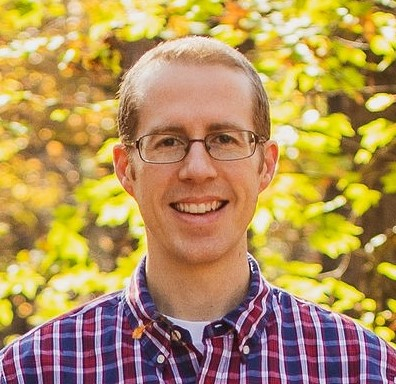
After graduating from Rutgers with a BS in electrical and computer engineering (ECE), Eric Burns earned a PhD from the University of North Carolina at Chapel Hill. From there, he began his career at Lockheed Martin as a senior software engineer, where he now holds the title of fellow in recognition of his exceptional expertise and innovation. He currently is discovering new ways to perform engineering differently now that AI tools are available.
Why Rutgers?
I'm an optimizer, and when I was going to college, I really wanted to optimize for the most bang for my buck. I wanted the best education I could get for the dollar. Rutgers is a fantastic engineering school and Rutgers tuition was a total bargain.
What do you most value about your SoE education?
Two things come to mind. First, the friends I made while there. My time at Rutgers was probably the time of my life where I had the closest community I have ever had. I'm so thankful for those people—and still keep in touch with them.
Second, the handful of professors who saw this rag-tag nerdy kid who was excited about a lot of things but not skilled in many and took a chance to sink significant time into teaching and mentoring me. ECE professors Deborah Silver and Kristen Dana were two who really inspired and guided me by awakening in me a love of computer graphics, encouraged my first feeble attempts in the field, and ultimately inspired me to get a PhD. I probably have never shared with them the profound impact they had on me. I should tell them.
Do you have any advice for new SoE students?
I have three pieces of advice. First, get seven to nine hours of sleep every night. I didn't do that but would have been so much smarter and happier if I had. Second, make sure you spend time with friends so that you, too, can look back at your time at Rutgers and be thankful for the relationships you made. Third, when you discover something you're interested in, go talk to the professor who is doing research in that field. As to do a special projects course with them or get involved as an undergraduate researcher.
How has your job focus changed as a fellow at Lockheed Martin?
Prior to that, I would be involved in two projects at a time, either as a technology lead or individual contributor focused on creating tools for our engineers and customers.
Now, I have more of a strategy role. Instead of building tools myself, I'm painting a vision for the direction I believe my organization should go in. I miss getting my hands dirty in tech, but it's very interesting to think about the bigger picture of what we're doing and ensure we are headed in the right direction.
How are you incorporating generative AI into the human workflow?
Oh, so many ways—and every day our engineers are discovering new ways to do so. We're incorporating agentic software engineering tools into our workflows, but also extending those tools beyond just software.
What do you predict for the future for your field?
Before predicting the future, it's interesting to reflect on how things have changed in just the past few years. I spent the first 15 years of my career building very robust software with clean, maintainable code, but in the past few years many of the applications we created have become obsolete after six to nine months as new technology has become available.
So, though it's still important to create quality secure software, it's less necessary to create it in such a way that it can be maintained over a long lifetime.
I imagine that trend will continue as AI continues to get better at coding. I think we'll see a real democratization of who is able to create software and we'll be creating single-use software applications that solve a particular problem and are then discarded.
How do you think your work is addressing the future?
There's been a lot of talk about how AI will accelerate the pace of human scientific discovery and engineering—even allowing us to make 100 years of progress in 10 years. It's exciting to think that I'm in the thick of it, helping to accelerate our engineering practices, and enabling us to reach higher than ever before. I'm privileged to see the things we're creating today, and I can't even begin to imagine the things that we'll be creating ten years from now.
What did you do for fun as a student?
My freshman year I took a recreational class in kung fu, and that became a hobby I kept up with all four years. Beyond that, there was always something going on that created lasting memories, from roller blading through Busch campus in the middle of the night to trying to eat an entire sandwich from the Grease Trucks without getting a stomach ache. They aren't there anymore—and you are all better off for it.
What do you do for fun these days?
My wife and I have four kids, ages three up to ten. In this phase of life, fun always looks different—from 3D printing with my oldest, to having a football catch, to playing with Paw Patrol toys. Parenthood has been the most exhausting, frustrating, exhilarating, and most meaningful thing I've done to date.
If you were to go on vacation tomorrow, where would you go?
I really like nature, and I've always wanted to go somewhere like the Brazilian rain forest or the African veldt, but I think Machu Picchu is my final answer.


